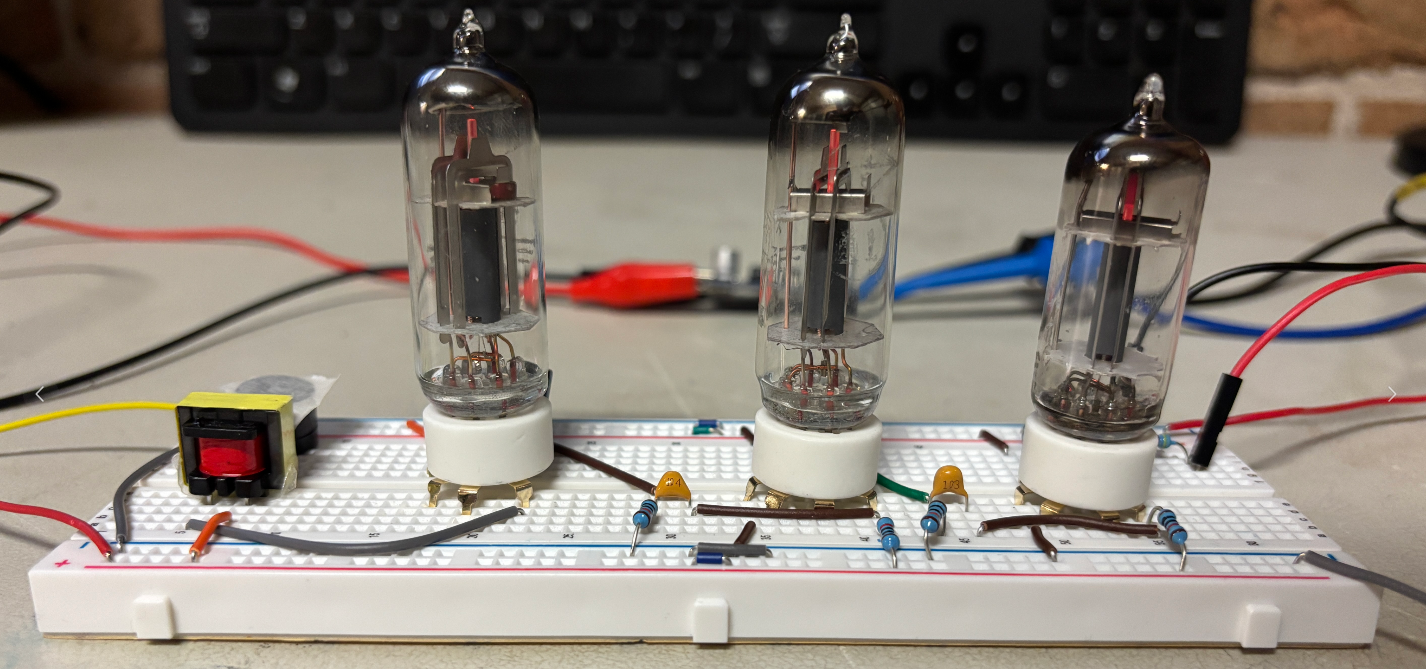
If you know me well, you'd know I'm very into vintage electronics. And before you ask—no, it's not because I think everything was better back in the day. It's just that old tech was simple. Like, genuinely simple. No million-layer abstractions. Just tubes, resistors, and the power of wishful thinking. I get kinda stressed out whenever I start a new project with semiconductors because I feel like I'm always just vibing and hoping it works.
Anyway, here's my semi-functional tube amp, built from this schematic:
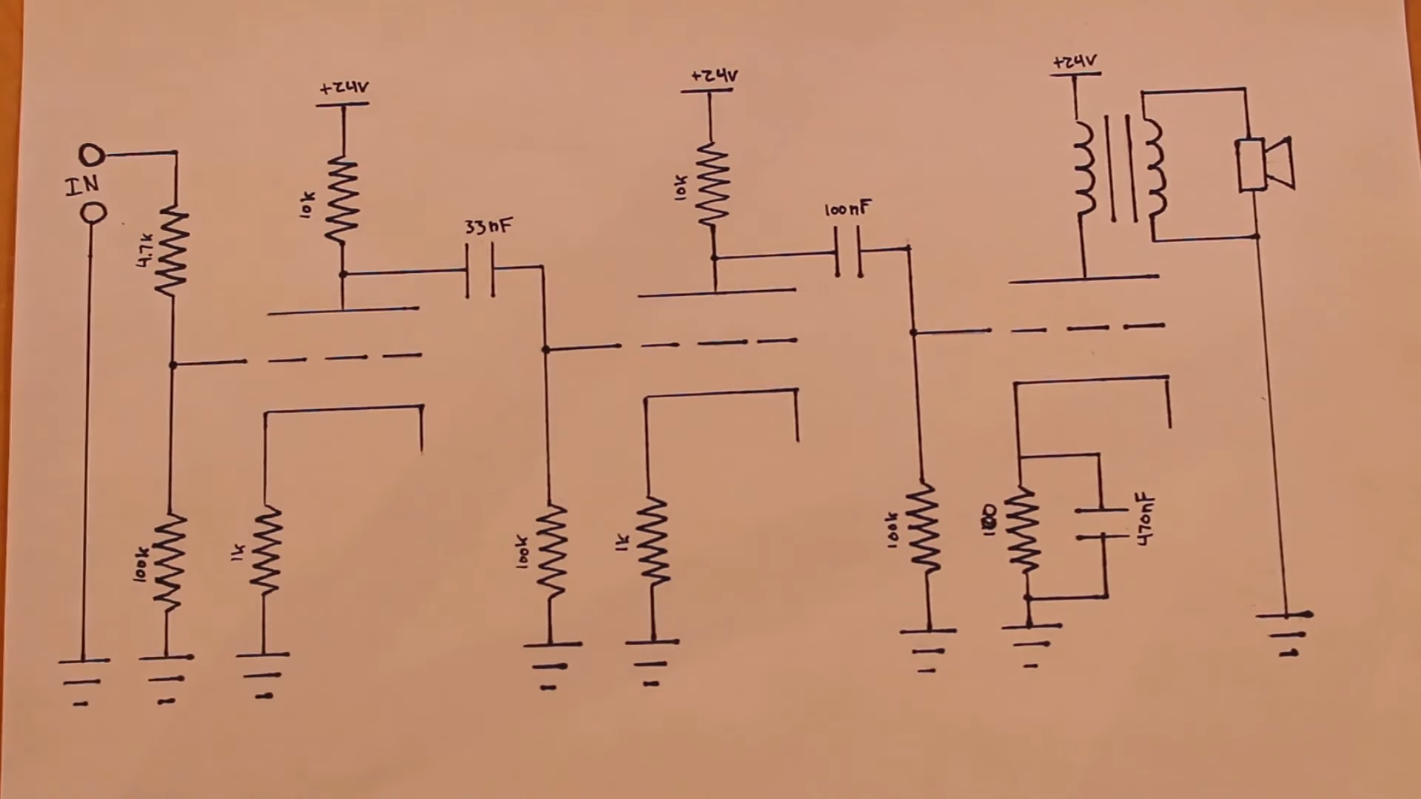
I wasn't about to blow my fingers off with 100V, so I went hunting for a circuit that'd work with something under 30V. I ended up using 6V at 0.3A for the tube heater and about 28V from a sketchy boost converter for the plate voltage.
Two stages: The first stage uses a 6AV6 tube (from the old AVW factory), and the second uses a 6Г2п-K (Beijing Tube factory—yes, it's Chinese, but apparently the Soviets were so influential back then that Chinese manufacturers just stuck Cyrillic letters on everything). Both tubes have the same pinout, except the 6Г2п-K is slightly taller.
Why two different tubes? I started with the 6Г2п-K because, y'know, expensive 6AV6s are scary ($10!) and cheap 6Г2п-K tubes are not ($1!). But the 6Г2п-K had no datasheet online. Fortunately, they're electrically identical to the 6AV6, so I just borrowed its datasheet.
Here's where things got fun: neither tube's filament would heat up. I swapped in the 6AV6, thinking maybe the cheap tubes were duds. Nope! still dead. Turns out I was reading the datasheet backwards. Classic.
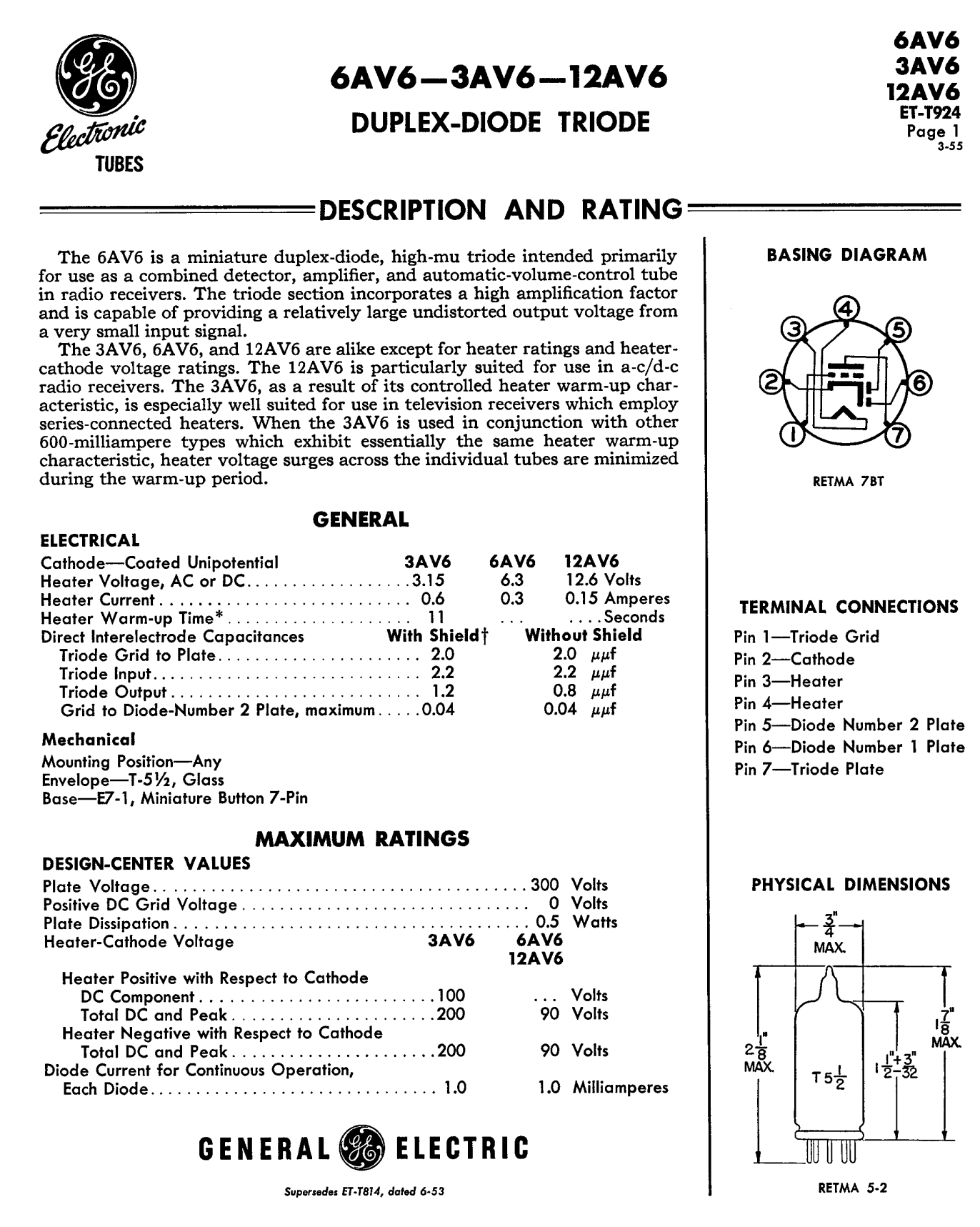
Turns out the pinout diagram was drawn from the bottom of the tube, not the top. Wild. I'd already kinda figured this out by probing around with a multimeter (measured ~20 Ω between what I thought were pins 4-5, which is what you would expect for a heater filament resistance). The WTF Amps site confirmed it and saved my sanity.
The leftmost tube is the output/driver stage. Its job is to take the weak signal from the previous stages and pass it through an audio transformer (8:1000 ratio) to get some actual current out—around 3mA. That's still very weak for driving a typical 8Ω speaker, so I just used a piezo buzzer since they have a higher impedance.
Here is a video of the amp in action:
The verdict: It doesn't actually amplify anything. 28V is just too wimpy to push any real current. Turns out you need the 100V the tubes are rated for to make tubes do fun stuff. Eventually I'll rebuild this with proper plate voltages, but for now I'm just stoked I got tubes glowing without burning my house down. This was honestly just an excuse to showcase that I'd built *something* with vacuum tubes.